


Marigolds
A garden of marigolds….orange, yellow and rust,
Bright, soft and rich, touched with golden dust.
Quiet and regal, sun kissed and fair,
Basil -citrus fragrance that mellows the moist air.
A thousand smiling marigolds, a thousand smiling suns,
Sweet nectar, ambrosia, for natures gentle ones.
Nishu Mathur, India
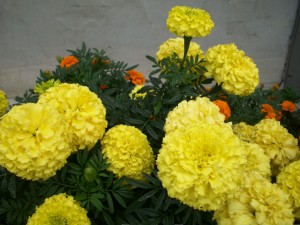 Marigolds are one of the easiest flowers to grow. They seem to pop up happily in any type of soil as long as there is enough sun, which can range from part to full. If thinned properly to about 8”, they will spread out and become a lovely border or patch. Though they are not graced with a sweet fragrance, most know of their anti-insect properties. This combined with their many varieties and bright colors make them a favorite for gardeners in almost any climate. They will start flowering in June and continue until frost. If you allow their seeds to ripen fully, they will scatter themselves and you will have a ready plot of marigolds in the spring!
Uses
Bug Spray and Repellent
To make an effective bug spray, place a handful of marigolds with their leaves in the blender. Fill half way with water and blend thoroughly. Let sit overnight then strain and add to a spray bottle with two tablespoons of liquid castile soap such as Dr. Bronner’s. Spray plants freely with this mixture to deter bugs.
Place marigold plants on the border of your lawn or garden. The smell that marigolds emit will prevent mosquitoes from entering a specific area, functioning similar to a border.
Deer Repellent
Marigolds are also used to help keep deer away. Though a hungry deer will probably not be too likely to be repelled by marigolds alone, if planted between rows of your veggies, their strong scent and bitter taste can be a helpful addition. According to Karyn Maier : “Marigolds are allelopathic, which means they produce a chemical that is poisonous to other living things. While the flowers are safe for people to enjoy in salads or tea, the roots produce a compound called alpha-terthienyl that is toxic to several kinds of insects and various fungi, bacteria and viruses. It is not clear if this chemical has any direct impact on deer, but it is known that deer tend to avoid plants that are poisonous or that have a strong scent or bitter flavor. Based on observation, deer at least seem to be put off by the strong smell of marigolds.”
Add the above spray to your plants at night and it just may be the thing save your veggies for you instead of feeding the neighborhood cervids! It’s worth a try!
People Uses
Marigold petals can be eaten and make a colorful garnish. Add varieties like “Lemon Gem” and “Orange Gem” to salads for a mild, citrusy flavor. Pick the flowers in the morning when they are just opening, and full of nectar. When adding them to a salad, wait until after it is dressed, as oil tends to make them soggy. The flowers can also adorn cakes or cupcakes.
A yellow dye has also been extracted from the flower by boiling. A nice natural alternative for a golden hue to your cloth fabrics and crafts.
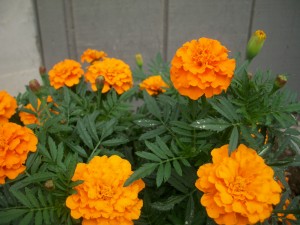 I cannot imagine a garden without some of these bright cheery flowers. With their almost maintenance free upkeep and natural reseeding, I will continue to make them a part of the ‘welcoming committee’ that greets passersby and visitors at the front of my home!