


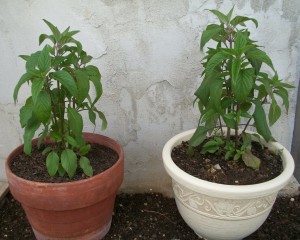
 I think pineapple sage may be my all time top of the list favorite herb. (Of course, there’s lemon verbena and some of those yummy Pelargoniums – scented geraniums, that also throw my olfactory senses into a tizzy!) But this salvia is really a delight that should at least be tried by every true herb gardener. Crush one leaf and close your eyes and you will be instantly transported into a lush cloud of heavenly scented tropical delight…ahhhh.
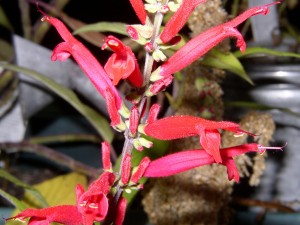
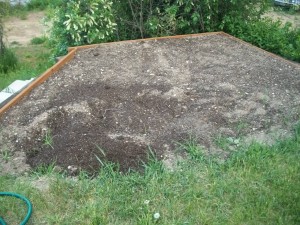 Anyway – back to earth – don’t let these plants of mine fool you. They are about one foot tall right now. In another 6-8 weeks they will be almost three feet, maybe more, and two to three feet wide. I will plant them toward the back of my plot you also see here, which is actually rather small. It’s an odd shape measuring 8 feet on three sides then 12 feet across the front. This will be the first year of planting this bed, so I’m pretty excited about designing the layout. Pineapple sage will lend a lovely green background which will then bloom into brilliant and vibrant red trumpet-shaped flowers late summer and last until frost.
 Perennial or annual?
Unfortunately, it is considered an annual for those in the Northeast Ohio area since it is a tender perennial best suited for warmer climates. If grown in sandy or otherwise sharply drained soil, pineapple sage may tolerate colder temperatures, going dormant and sprouting new growth in spring. But 20 degrees is about as low as it will tolerate. If Mr. Jack Frost holds off, you may find your bushy blooming plants attracting groups of fluttery friends including butterflies and hummingbirds. They will be extremely grateful for the extra fuel as they migrate back to the warmer climates for the winter, and you will thoroughly enjoy them as guests!
Where to plant outdoors
Plant your pineapple sage in a place in the sunshine where it receives at least six hours of light, but if weather is especially severe in the 90s, best to place it in the shade during the late afternoon “fry time.” Plant where the soil is well drained but moist and rich enough to support its rapid growth. At least two feet between plants should give enough room for each to widen their girth, but three feet may even be better to prevent crowding. Water often! Or you may find your herbs in droopy posture on those brutally hot days. And it could be fatal!
If you live in an especially windy area, consider staking. It’s not uncommon for stalks to break during high winds and then you may be out the end of summer show of blooms when you walk out and find your sage just got a crew cut.
Growing Pineapple Sage Indoors
If you choose to bring your pineapple sage indoors in the fall to overwinter, cut it back to about half size a week or so before. Place it in a sunny window. Don’t harvest leaves over the winter months. You can also try your hand at propagating shoots by taking four to five inch cuttings and removing all but the top two leaves. Place the cuttings in a plastic bag about half full of sand. Keep the sand moist and place it in an east window for two to three weeks. Watch for those little roots to sprout!
You can find numerous recipes for your pineapple sage online. Try this site for three tasty ideas. For me, I like to add a couple of leaves to almond milk and a frozen banana then blend it up until nice and thick…yum! A perfect summer cooler on those humid days!
***
If you would like to contribute to this feature with your own nerdy thoughts, please write me at patty@littleacornmedia.com with herb nerd as the subject.