


The moon has been the subject of thousands of artists and writers over the centuries. It holds a place in most everyone’s memory for an event at some point in life. Dogs howl, and cats prowl while the tiny ones shiver in fear of the owl.
Full moons are captivating. To walk outside late at night and be greeted by a world aglow with silhouetted trees, houses, and perhaps animals and people, is antithetical to the expectation of our conditioned minds. Every month Earth’s moon goes through its phases, waning and waxing in its constant transformation from new moon to full moon and back again. Every 29.5 days the moon moves to the side of Earth directly opposite the sun, appearing as a brilliant ornament miraculously hanging in the sky. There really are other things besides death and taxes that we can count on as stable certainties of life!

For centuries, people have used the movement of the moon to keep track of time, the passing year, and set schedules for hunting, planting, and harvesting. Native American tribes named their moons to correspond to the seasons of their lives based on the observations of nature around them. The Algonquin people from the New England area to as far west as Lake Superior gave names to each full moon during the year and is what early settlers adopted, though there have been a host of other names ascribed to these moons as well.
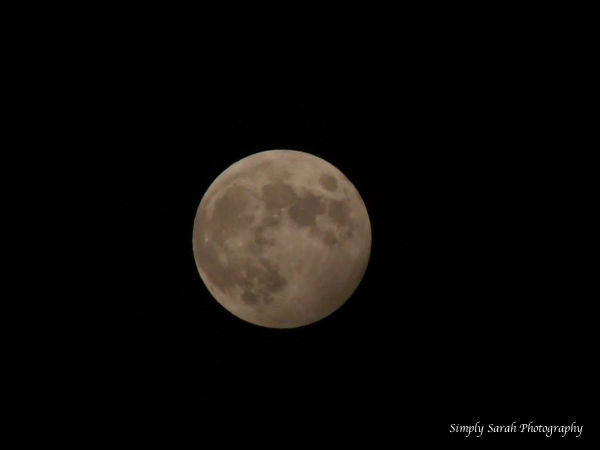
December is known as the Full Cold Moon or the Full Long Night Moon. It officially occurs this year on December 17, 4:28 a.m. EST. This is the longest and darkest night of the year. It is also sometimes called the Moon before Yule. The term Long Night Moon appropriately describes it, as the night is indeed long, and because the moon is above the horizon for a long time. The midwinter full moon has a high trajectory across the sky because it is opposite a low sun.
If you wish to observe this, you can do so tonight, December 14, at Stephens Memorial Observatory in Hiram, anytime between 7 and 9 p.m. This will be the last public viewing for the year, so if you haven’t had an experience at an observatory for awhile, why not stop by if you’re out or take the kids for a fun evening of star and moon gazing! Please park in the lot at Harrison’s Hideaway Convenience Store, 6821 Wakefield Road, just a couple of hundred feet east of the Observatory, or on side streets where parking is allowed. Check their website HERE for more info.
Afterward, or perhaps before if time, find these classic books: Goodnight Moon by Margaret Wise Brown for the little ones, and Winter Moon by Jean Craighead George for the older ones who will read how a song sparrow survives an icy night under a December moon while stalked by a midnight predator in Ohio’s suburban meadowland.
December Moon
Before going to bed
After a fall of snow
I look out on the field
Shining there in the moonlight
So calm, untouched and white
Snow silence fills my head
After I leave the window.
Hours later near dawn
When I look down again
The whole landscape has changed
The perfect surface gone
Criss-crossed and written on
Where the wild creatures ranged
While the moon rose and shone.
Why did my dog not bark?
Why did I hear no sound
There on the snow-locked ground
In the tumultuous dark?
How much can come, how much can go
When the December moon is bright,
What worlds of play we’ll never know
Sleeping away the cold white night
After a fall of snow.
by May Sarton
*Special thanks to Simply Sarah Photography who supplied the moon photos. Sarah is a local Portage County student.
Follow her on Facebook at Simply Sarah Photography